Evaluating KDP Interior Word Search Files: When Ready-Made Assets Fit Your Publishing Strategy
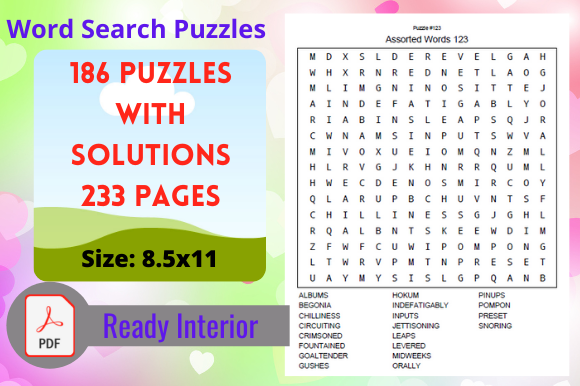
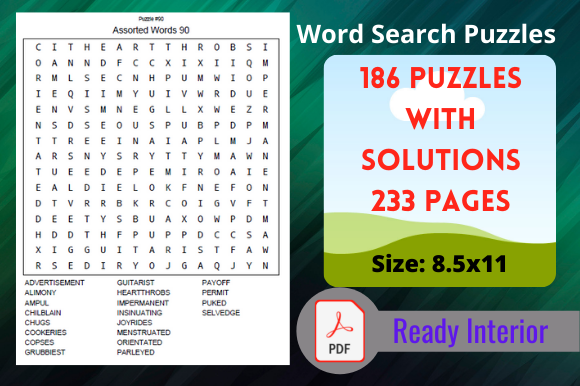
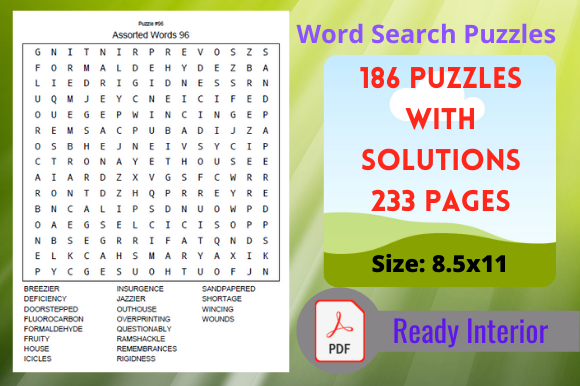
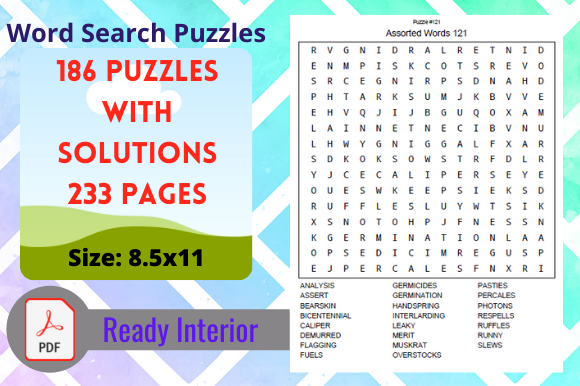
For independent publishers operating within the Amazon Kindle Direct Publishing ecosystem, the decision between creating custom content and utilizing pre-made assets is a fundamental strategic choice. A KDP interior word search file serves as the structural backbone of low-content puzzle books, determining not only the user experience but also the production timeline and profit potential. Welcome to Lafuma Design Studio offers a specific configuration of these assets: a ready-made PDF containing 186 puzzles across 233 pages in an 8.5" x 11" trim size. Understanding where this type of resource fits into a broader publishing portfolio requires analyzing technical specifications, market saturation, and operational efficiency against alternative creation methods.
Technical Specifications and Production Standards
When evaluating any pre-formatted interior, the technical alignment with KDP’s printing requirements is the primary filter. The Lafuma Design Studio package adheres to standard industry dimensions that minimize friction during the upload process. The 8.5" x 11" trim size is the most versatile format for adult activity books, offering sufficient whitespace for readability while maximizing paper economy. This specific file includes 186 unique word search puzzles formatted at one puzzle per page, followed by solution pages organized four per page.
This layout density is a critical comparison point. Some alternatives offer two puzzles per page to reduce page count and printing costs, but this often compromises accessibility for older demographics or users with visual impairments. Conversely, high-end custom interiors might dedicate entire pages to solutions, which increases perceived value but significantly raises manufacturing costs. The four-solutions-per-page format found in this KDP interior word search file represents a balanced middle ground. It keeps the total page count at 233, which sits comfortably within standard royalty tiers without feeling sparse or overly cramped.
The black-and-white formatting is standard for this category, ensuring compatibility with KDP’s standard color ink options. Publishers must verify that the contrast levels in any pre-made PDF meet the 300 DPI threshold required for crisp text reproduction. While digital previews may look acceptable, print-ready files must maintain vector-quality sharpness to avoid pixelation in small font sizes typical of solution keys.
Comparing Ready-Made Interiors vs. Custom Generation
The core value proposition of acquiring a ready-made KDP interior word search file lies in time allocation. Creating 186 unique, error-free puzzles manually is a significant undertaking. Even with automated software, the process involves generating word lists, configuring grid layouts, verifying solvability, formatting pages, and compiling solution keys. For a publisher managing multiple titles, this production bottleneck can delay launches by weeks.
However, this convenience introduces tradeoffs that must be weighed against custom creation:
- Uniqueness: Pre-made files are non-exclusive unless specified otherwise. Multiple publishers may utilize the same Lafuma Design Studio asset, leading to duplicate content issues on Amazon. Custom interiors guarantee uniqueness but require higher upfront effort or software investment.
- Niche Specificity: Generic word search interiors cover broad themes. If your publishing strategy targets hyper-specific niches (e.g., "Medical Terminology for Nursing Students" or "1980s Synthwave Culture"), a generic 186-puzzle pack may lack relevance. Custom generation allows precise vocabulary curation that aligns with specific audience intent.
- Brand Consistency: Ready-made files have fixed typography and header styles. Integrating them into an existing series with established branding may require additional design work to match fonts, margins, and instructional language. Custom interiors provide complete aesthetic control from the outset.
- Cost Structure: Purchasing a license for pre-made interiors is typically a flat fee, making it cost-effective for high-volume testing. Custom creation has no direct licensing cost but carries opportunity costs related to labor hours and software subscriptions.
Assessing Market Fit and Audience Alignment
Not all word search books serve identical purposes. The suitability of this specific KDP interior word search configuration depends heavily on your target demographic and product positioning. The 186-puzzle volume suggests a comprehensive activity book rather than a niche supplement. This volume works well for general audiences seeking long-term engagement, travel companions, or cognitive maintenance tools for adults.
For publishers targeting children or early readers, this interior may be inappropriate. The single-puzzle-per-page layout with standard grid density is optimized for adult cognition and vision. Children’s puzzle books typically require larger fonts, simpler grids, themed illustrations, and fewer words per puzzle. Similarly, luxury or gift-market puzzle books often incorporate decorative elements, colored backgrounds, or thematic imagery that a utilitarian black-and-white PDF cannot provide.
The "ready-to-upload" nature of this file makes it ideal for publishers who view puzzle books as part of a diversified catalog rather than a singular artistic endeavor. If your business model relies on testing multiple keywords and niches rapidly, the ability to deploy a professionally formatted interior without modification accelerates market feedback loops. However, if you are building a premium brand centered on original content quality, this resource should be evaluated as a supplementary tool rather than a foundation.
Strategic Integration and Licensing Considerations
Acquiring a KDP interior word search file from Lafuma Design Studio or similar providers requires careful attention to usage rights. Publishers must distinguish between personal use licenses and commercial distribution rights. For KDP businesses, commercial rights are non-negotiable. Additionally, understanding exclusivity terms prevents future account complications. Non-exclusive licenses allow unlimited use across projects but do not prevent competitors from accessing identical content.
Experienced publishers often adopt hybrid approaches to mitigate duplication risks while leveraging pre-made efficiency:
- Content Layering: Use the pre-made puzzles as a base but add custom introductions, themed sections, or bonus activities to differentiate the final product.
- Cover Differentiation: Since interiors may overlap across sellers, invest disproportionately in unique, high-quality cover design. Covers drive click-through rates and serve as the primary brand identifier when internal content is commoditized.
- Series Integration: Position ready-made interiors as entry-level products within a tiered catalog. Reserve fully custom, niche-specific interiors for premium-priced flagship titles.
- Testing Ground: Utilize pre-made files to validate keyword demand before committing resources to custom development. If a niche shows traction with generic content, justify the investment in bespoke interiors for subsequent editions.
Decision Framework for Publishers
Choosing whether to integrate this 186-puzzle KDP interior word search file into your workflow depends on current capacity, budget, and strategic objectives. This resource is most appropriate when:
- You need to launch quickly to capture seasonal trends or trending keywords.
- Your publishing volume exceeds your custom creation bandwidth.
- You are testing new niches with uncertain demand.
- Your audience prioritizes puzzle quantity over thematic specificity.
- You possess complementary differentiation strategies (covers, marketing, bundling).
Conversely, alternative approaches warrant consideration when:
- Your brand promises exclusive, original content as a core value proposition.
- Target niches require specialized vocabulary unavailable in generic packs.
- You operate in highly saturated categories where duplicate content triggers algorithmic penalties.
- Long-term asset ownership and IP protection are strategic priorities.
- Budget constraints favor sweat equity over licensing fees.
The 233-page, 8.5" x 11" format with integrated solutions provides a technically sound foundation compliant with KDP standards. Its utility ultimately depends on how it complements your existing capabilities and fills gaps in your production pipeline. Publishers who treat pre-made interiors as strategic tools rather than shortcuts tend to achieve sustainable results, balancing efficiency with the differentiation necessary for long-term visibility in competitive marketplaces.
Evaluation should always include reviewing sample pages before purchase to verify formatting quality, font legibility, and puzzle integrity. Technical compliance does not guarantee user satisfaction; the spacing between letters, clarity of instructions, and accuracy of solutions directly impact reviews and return rates. By approaching KDP interior word search resources with analytical rigor rather than convenience-seeking impulse, publishers can make informed decisions that align operational realities with market opportunities.